




19 Sep Property Development in Somerset: What Makes a Good Development?
Property development in Somerset presents a unique set of opportunities and challenges. From established market towns and historic villages to rural sites and previously developed land, every location brings its own character, constraints and potential.
That means successful property development in Somerset cannot simply be about maximising the number of homes that can be built on a site. It requires a more considered approach, one that looks at the land, its surroundings and the long-term value a development can create.
For developers and landowners, the most important question is not always how much can be built. It is what should be built, and how it can become a positive addition to its location.
What makes property development in Somerset different?
Somerset is not a uniform market. A development opportunity in a rural village presents very different considerations from one within an established town.
Local character, landscape, access, infrastructure, existing architecture and the relationship between settlements and the surrounding countryside can all influence how a site should be approached.
This makes understanding the context of a site particularly important.
Good property development in Somerset starts with looking beyond the boundaries of the land itself. What surrounds it? How does it connect to the existing settlement? What are the important landscape features? What is already working well in the area, and where are there opportunities to improve it?
These questions can influence everything from the scale and layout of a development to the design of the individual homes.
Development starts with the site
Every site has its own opportunities and constraints.
Orientation, topography, existing vegetation, neighbouring properties, access and views can all affect what is possible. Understanding these characteristics early can help shape a development that works with the site rather than against it.
This is particularly important when considering smaller development opportunities.
A site does not necessarily need to accommodate the maximum theoretical number of homes to create value. A carefully considered layout with appropriate landscaping, good orientation and well-designed properties can create a stronger long-term outcome than simply trying to maximise density.
The right approach depends on the individual site.
Why context matters in Somerset
Somerset has a distinctive architectural and environmental character. Historic buildings, traditional materials, established villages and open countryside all contribute to the identity of the county.
New development does not have to imitate historic architecture to belong within this environment. However, it should demonstrate an understanding of its surroundings.
Scale, materials, rooflines, landscaping, views and the relationship between buildings can all influence how successfully a development sits within an existing setting.
For property development in Somerset, this consideration can be particularly important because a new development can become part of the local landscape for generations.
Good design therefore needs to look beyond the completion date.
Sustainability should be part of the design
Sustainability is becoming an increasingly important consideration in property development, but energy efficiency should not be treated as something added at the end of a project.
The way a building is positioned, insulated, ventilated and heated can all influence its performance. Considering these elements from the earliest design stages creates more opportunities to develop an efficient and comfortable home.
At William Abbott Group, sustainability forms part of the wider approach to development.
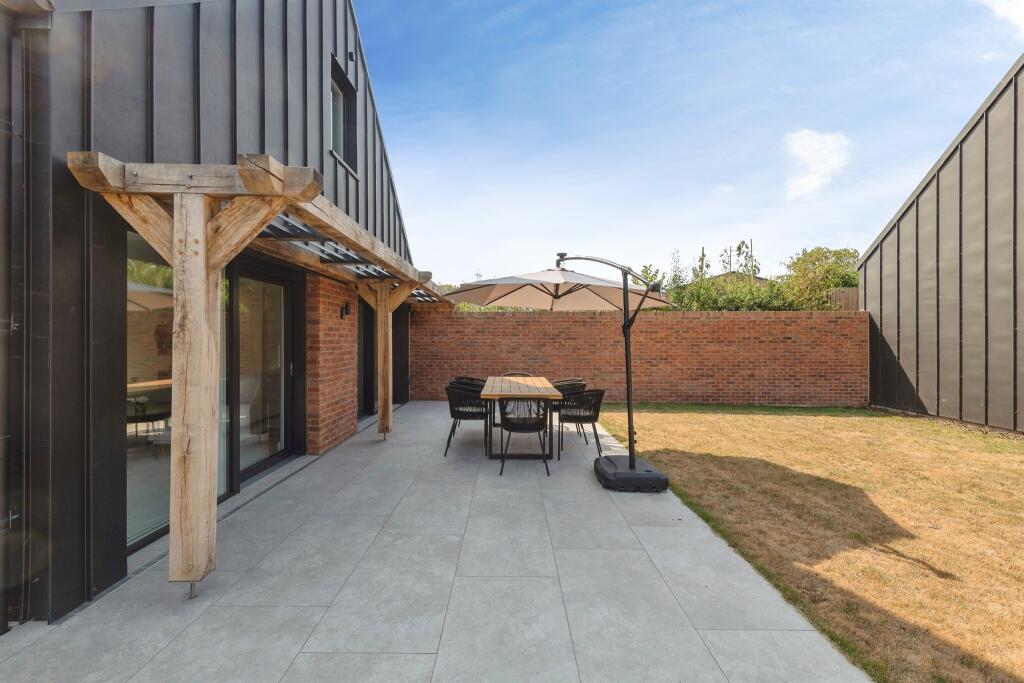
Oake View Farm Plot 2 is one example. Designed to Passivhaus standards, the home incorporates a range of measures focused on energy efficiency and reducing operational energy demand, including high levels of insulation, airtight construction and mechanical ventilation with heat recovery.
The principle extends beyond one particular standard.
Good property development should consider how a building will perform throughout its lifetime, not simply how it looks when it is completed.
More homes does not automatically mean better development
Increasing housing supply is an important part of the UK’s planning landscape, but the number of homes delivered is only one measure of a development.
The quality of those homes, their relationship with the surrounding area and their long-term performance also matter.
A development that responds appropriately to its location can create value for homeowners while contributing positively to the wider community.
That does not mean every development should be low density. In some locations, making efficient use of land is entirely appropriate. The important question is whether the scale and density are right for the site.
For landowners considering property development in Somerset, this is an important distinction.
The greatest number of units is not necessarily the same thing as the greatest development opportunity.
Understanding the potential of land
One of the most important stages of property development happens before construction begins.
Understanding whether a site is genuinely suitable for development requires consideration of planning policy, access, infrastructure, ecology, landscape, neighbouring properties, market demand and viability.
These factors are interconnected.
A change to the layout might affect access. A landscape constraint might influence the number of homes. Energy performance requirements might influence the building design. Local character might affect materials and appearance.
Considering these elements together can create a more realistic understanding of what a site can achieve.
It can also help avoid approaching development with assumptions that later prove difficult or expensive to change.
Creating long-term value through property development
The strongest developments are designed with more than the immediate sale in mind.
A well-designed home should remain desirable. A well-planned site should continue to work as its surroundings evolve. Sustainable design can help reduce energy demand, while durable materials and thoughtful construction can contribute to the longevity of the buildings.
This broader perspective is particularly relevant to property development in Somerset, where developments can sit within established communities and distinctive landscapes.
The objective should be to create something that feels appropriate today while remaining valuable in the future.
A considered approach to property development in Somerset
There is no single formula for successful development.
Every site has its own characteristics, and those characteristics should influence the decisions made throughout the development process.
At William Abbott Group, we believe that starts with understanding the opportunity within the land itself. By considering planning, design, sustainability and the surrounding environment together, it is possible to create developments that do more than add new homes.
They can transform underused land, contribute to local housing supply and create places that people genuinely want to live.
That is the opportunity within property development in Somerset: not simply building more, but creating developments that make sense for the places in which they belong.